Our mission
Accelerate industry's transition to net zero by closing the loop between organic residues and energy consumption.
 Renewable Green Fuels · Australia
Optimal Green Fuels recovers forestry and agricultural residues to produce biomethane, renewable dimethyl ether (rDME) and bio-propane - decarbonising hard-to-abate sectors that electrification cannot reach.
A subsidiary of Optimal Group Australia, developing industrial-scale renewable liquid and gaseous fuel projects from organic residues.
Accelerate industry's transition to net zero by closing the loop between organic residues and energy consumption.
To be Australia's leading developer, owner and operator of renewable green liquid and gaseous fuels - biomethane, dimethyl ether (DME) and bio-propane.
Hard-to-abate sectors such as high-temperature industrial heat, steam generation, and applications that remain dependent on fossil fuels.
 Engineering Capability
 Technology Partnerships
 Commercial Competency
 Market Partnerships
A four-stage pathway from residue collection to renewable fuel delivery.
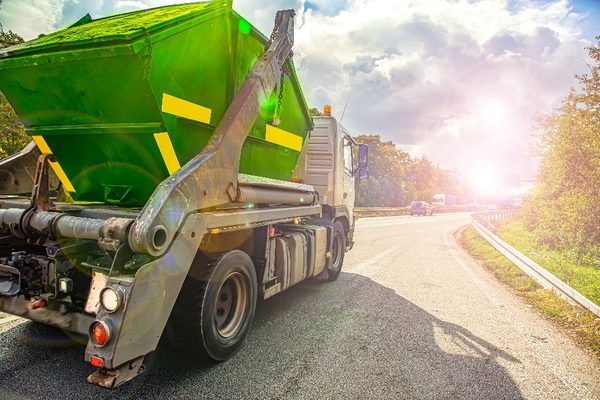
Feedstocks are collected and delivered to the facility, with some streams providing an additional gate-fee revenue.
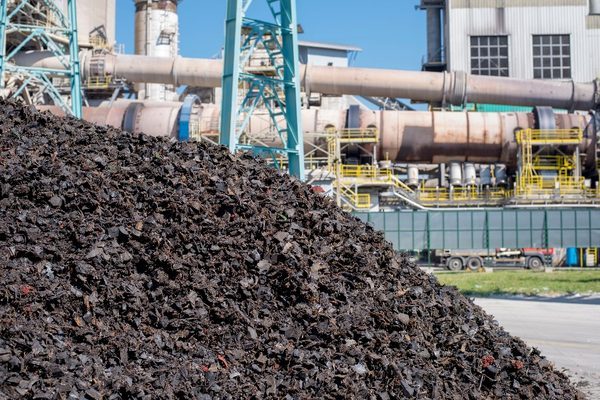
Organic waste is converted into biochar and syngas. Biochar and associated carbon credits are sold separately or together.
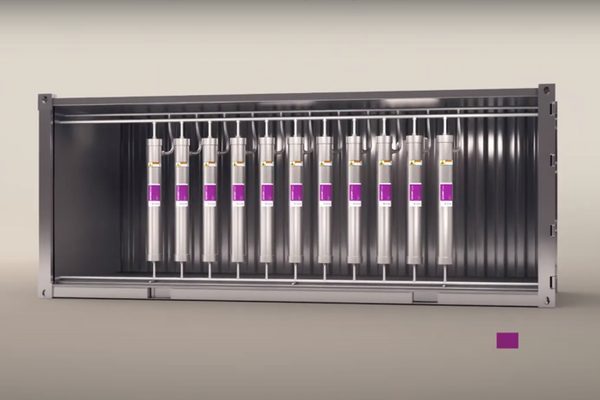
Syngas is separated, cleaned and processed through a two-stage catalytic route to DME, or used as a source of biomethane.
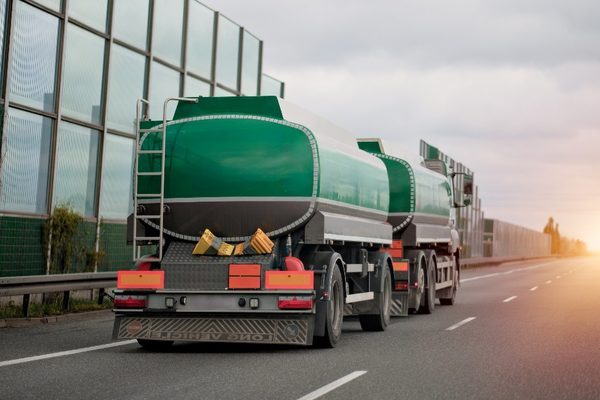
DME is sold through partner retailers with renewable gas certificates. Biomethane is injected into the natural gas grid.
A convergence of policy, waste-management pressure and technology readiness makes this the time to build.
Global emissions gaps continue to widen against Paris Agreement trajectories.
Only 2% of organic waste is adequately treated or recycled. Diversion of this waste could cut global emissions by up to 10%.
Organic-waste-to-biomethane avoids fugitive methane emissions and displaces fossil fuels.
The core pyrolysis technology is mature, reliable and internationally proven.
Government and industry focus on decarbonising energy markets, increasing costs and restrictions on organic waste management, and a proven technological pathway have converged. Demand for renewable LPG-equivalent products and biomethane currently exceeds available supply.
A modular, counter-flow pyrolysis reactor engineered for low-quality biomass residues.
Optimal deploys the ECHO₂ pyrolysis technology - an Australian-designed, counter-flow reactor developed and tested over more than 15 years.
The process produces high-quality biochar and clean, cool syngas without downstream chemical clean-up. It is designed to operate on low-quality residues such as husks and straw, and is certified for Carbon Removal by puro.earth.
The reactor is modular and scaled to each application, reducing project execution and capital risk.
An in-house next-generation model that doubles the reactor's main chamber diameter, delivering an estimated 400% capacity uplift for a 50–100% increase in capital cost. Preliminary modelling indicates a 35–40% improvement in project IRR. A parallel value-engineering programme targets a 40% capital cost reduction on the standard ECHO₂ configuration and an extension of the operating cycle between maintenance intervals.
Five marketable output streams from a single circular process.
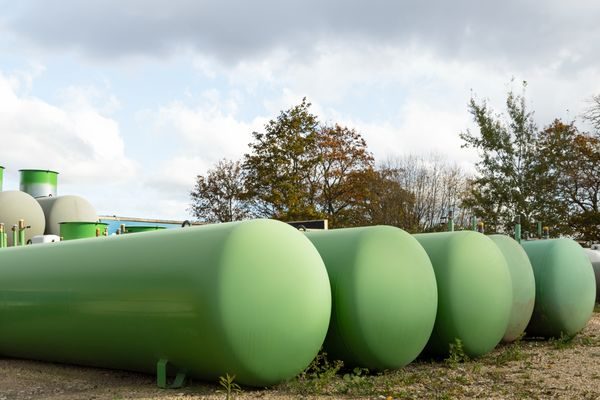
Drop-in replacement for LPG, blended or pure, with little to no change to existing infrastructure.
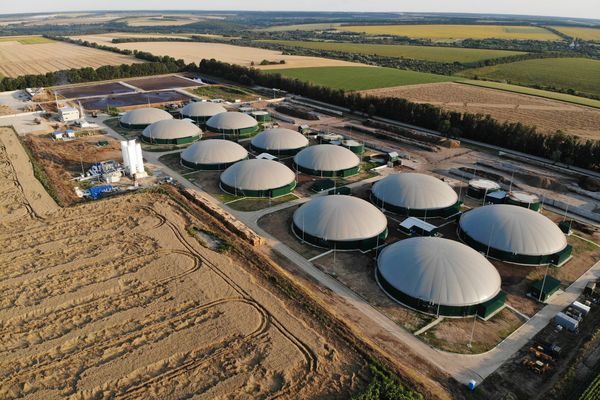
Fully interchangeable with natural gas; injected directly into existing pipelines.
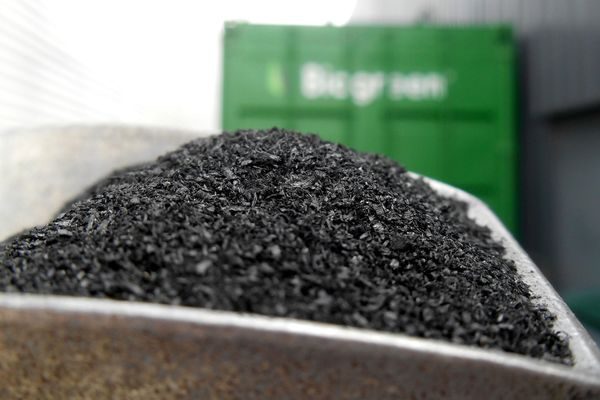
Near-pure carbon plus residual nitrogen, phosphorus and potassium. Used in fertiliser, animal feed, low-carbon concrete and road base.
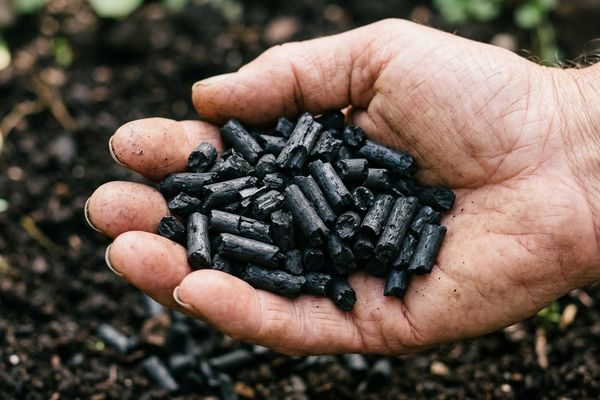
Pelletised biochar - a homogenous, water-resistant, grindable alternative to coal for thermal energy, green steel and cement.

Each tonne of biochar delivers approximately 2.4 tonnes of CO₂ removal equivalent. International CORC market currently ~€100–200/tonne.
A material contribution to Australia's LPG and natural gas decarbonisation.
DME is expected to play a significant role in LPG decarbonisation on the pathway to 2050 (source: Frontier Economics). It is fully interchangeable with LPG as a pure fuel or as a blend, with little to no infrastructure change required.
Optimal's modelling indicates renewable DME from pyrolysis syngas costs four times less than hydrogen from electrolysis, as well as being much cheaper to store and transport.
OGF is targeting five Australian projects by 2030. Seven prospective sites are currently under consideration for development.
Agreements in place with domestic and international companies across feedstock, technology, offtake and distribution.



Deep engineering, energy-markets, agricultural and finance experience.

30+ years in international onshore and offshore oil and gas. Process engineer by training; former MD of Process Group. Holds patents in carbon capture and storage.
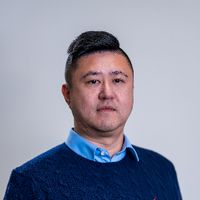
Commercially focused finance director with 15+ years' experience in large multinationals. Expertise in strategy, M&A, internal control and performance management.
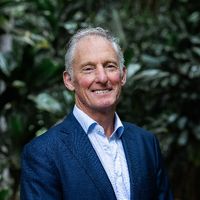
Founder of several institutionally-backed Australian farming portfolios and a leading non-bank agri lender. 20+ years in global agri commodity trading.

35+ years in process engineering across the Middle East, US, Central and South-East Asia, PNG and Australia. Specialist in H₂S and CO₂ removal, water treatment and gas compression.
For investor and partnership enquiries, please contact the Optimal Green Fuels team.
Optimal Green Fuels Pty Ltd is a subsidiary of Optimal Group Australia.